
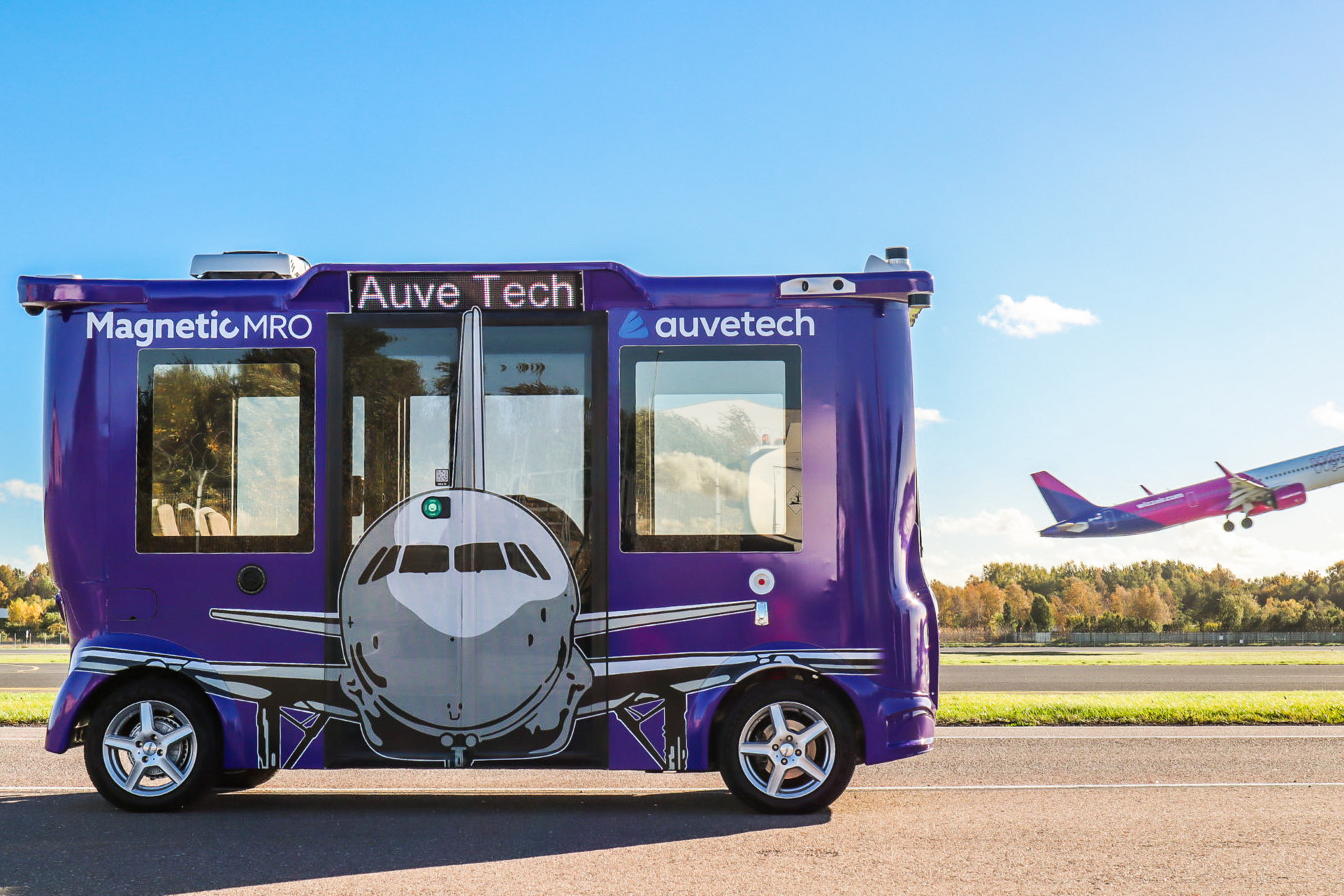
Tallinn Airport launches Europe’s first unsupervised driverless shuttle
Tallinn Airport has become the first airport in Europe to authorise autonomous passenger transport without an onboard safety operator, marking a significant step towards making driverless vehicles part of everyday airport operations.
The development means autonomous shuttles can now operate without a human supervisor on board, with one remote operator overseeing multiple vehicles. The airport is already using the technology to transport maintenance staff and equipment between facilities.
“Tallinn Airport has always placed great importance on innovation and on creating an environment where new technologies can be tested and developed in real-life conditions,” said Riivo Tuvike, Chairman of the Management Board of Tallinn Airport. “The airport environment, with its strict safety requirements, rules and procedures, provides an excellent setting for gaining the experience and knowledge needed to introduce autonomous mobility more widely in the future.”
The service, developed by Estonian company Auve Tech in partnership with aircraft maintenance provider Magnetic MRO, covers approximately 1,000 kilometres per week, with an average autonomy rate of 99.9 percent.
The project began in 2023, when Auve Tech started testing autonomous vehicles at the airport. It progressed to commercial operations in 2025, before receiving authorisation in August 2026 to operate without an onboard safety supervisor.
The eight-passenger electric MiCa shuttle uses cameras and LiDAR sensors to navigate its surroundings. Classified as a Level 4 autonomous vehicle, it can operate independently within defined conditions, while remote supervisors remain available to intervene when necessary.
For Magnetic MRO, the technology has become part of its everyday logistics operations rather than a standalone trial.
“For us, this is not about testing technology anymore. The autonomous vehicles are already part of our daily operations, supporting the continuous movement of people and supplies between our hangars.” said Risto Mäeots, CEO of Magnetic Group.
Kaarel Variksaar, CEO of Auve Tech, said remote supervision was central to making the technology commercially viable.
“A single remote operator can monitor multiple vehicles,and this is a key step toward making autonomous transport economicallycompetitive and scalable.”
Although currently focused on maintenance logistics, the deployment could provide a model for wider autonomous transport services at airports, including moving staff and passengers between facilities.
Image: Auve Tech