
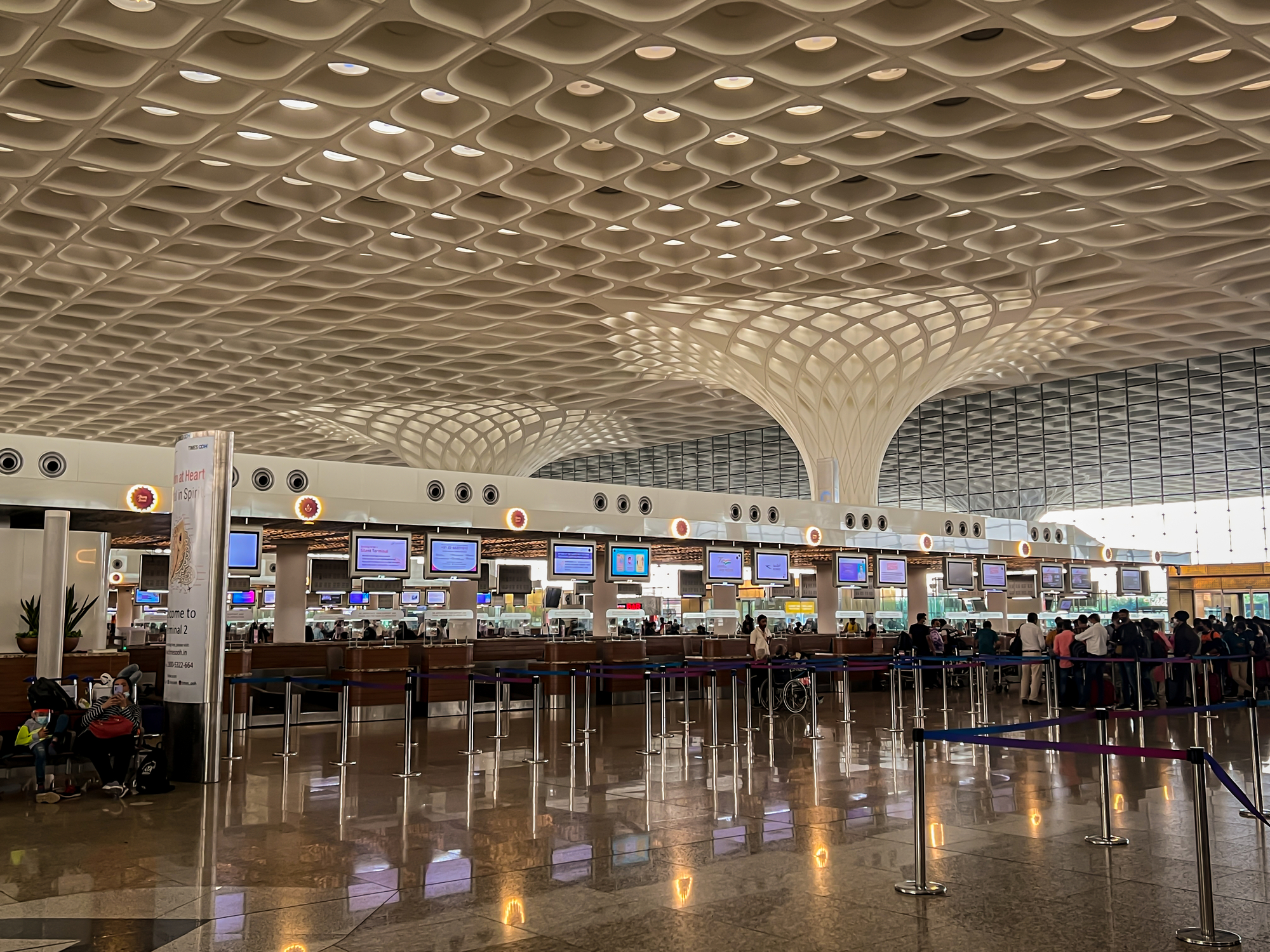
Adani Airports deploys its avioo platform to drive operational efficiencies
A broken baggage belt, a growing security queue or a malfunctioning toilet might seem like routine airport problems, but identifying them quickly can make the difference between a minor disruption or an escalation to a passenger complaint or dispute.
Adani Airport Holdings, which operates eight airports including Mumbai, Ahmedabad and Lucknow, is using its AI-enabled aviio platform to bring these operational issues into view, allowing staff to respond before matters get worse.
“If a baggage belt is broken, a ticket will get raised later, but the ministry will get a tweet before that!” Ekta Ghosh, Chief Digital Officer at Adani Airport Holdings, tells the Airports AI Alliance. For Ghosh, the challenge is to ensure airport teams have access to information early enough to act, rather than learning about problems through passengers or social media.
The pressure is growing as airports accommodate rising passenger demand. Boston Consulting Group is forecasting Indian air travel growth of 12 percent in 2026, compared with 5.8 percent globally.

Ekta Ghosh, Chief Digital Officer at Adani Airport Holdings
“While there is a lot of investment happening with privatisation to create more airport capacity, build more terminals and make sure there are more runways, that takes time,” Ghosh says.
So Adani has developed aviio to combine information from airport systems, airlines, security agencies and connected devices to support operational decisions and drive efficiencies. Which in turn means that its terminals can operate effectively even with the growth in passenger numbers.
Building the foundations
Integrating previously disconnected systems into avioo has been a major undertaking. Adani has identified more than 100 airport, airline, commercial and infrastructure systems for integration, including sensors and operational technology, with approximately 60 to 70 connected so far.
The platform uses APIs and integration software to exchange information in real time, supported by a common data model covering aeronautical and non-aeronautical operations. Bringing these sources together allows operational teams to work from shared information rather than separate systems.
Data governance is another priority. Adani has worked with India’s aviation authorities and other stakeholders to establish digital access procedures reflecting existing physical security arrangements. Users undergo identity verification and multi-factor authentication, while role-based controls restrict what individual organisations can see.
“I do not want IndiGo to look at Air India’s data,” Ghosh explains. “I do not want CISF [Central Industrial Security Force, which provides airport security] to look at non-aero operations data.”
The platform also works without passengers’ names or other personally identifiable information from airlines. Instead, aggregated flight manifest data enables aviio to forecast hourly passenger arrivals, helping the CISF to plan screening resources.
Forecasts of peak arrivals and the expected proportion of male and female passengers help determine how many separate pat-down lanes should be opened. Rather than waiting for queues to develop, security managers can prepare staffing levels in advance.
Encouraging collaboration
Persuading external partners to share operational information has presented another challenge.
“Airlines and airports, as we know, historically do not share data,” Ghosh says. “So we’ve started the conversations by describing what’s in it for them?”
Adani is focusing on demonstrating practical benefits. Computer vision can identify queues building at check-in counters, helping airlines assess staffing needs and respond to congestion. Two Indian airlines are testing customised dashboards, which Adani is providing to operational partners free of subscription charges.
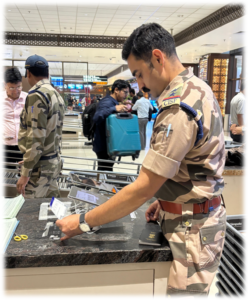 The CISF has also received mobile phones and tablets preloaded with aviio. One application digitises the recording of prohibited items discovered during security screening. Instead of photographing confiscated objects and separately writing down their details and the passenger’s boarding pass information, officers can capture and upload the records using computer vision.
These applications illustrate how data-sharing arrangements translate into operational benefits. They also give airlines and security agencies a practical reason to participate in a platform managed by an airport operator.
Changing established working practices
Mumbai was the first airport to deploy aviio, but changing employee behaviour proved difficult. Terminal staff accustomed to telephoning the Airport Operations Control Centre continued doing so even after the same information became available on their mobile devices.
Adani introduced training and hands-on support, but Ghosh says “what really worked was that we started shutting down the alternative systems”.
Approximately 15 standard operating procedures have been digitised, covering activities such as incident reporting, foreign object detection and security screening. Older email-based and ticketing processes have progressively been decommissioned, making aviio part of routine operations rather than an optional add-on.
Adani has also introduced leaderboards comparing adoption across its eight airports. Daily operational reviews now take place through the platform, while senior executives are beginning to use it for monthly financial and non-aeronautical reviews.
“If your leader is looking at it, adoption gets to 100 percent,” Ghosh comments.
Measuring results and improving accuracy
Ghosh reports reductions of up to 20 percent in passenger processing times, although she cautions against attributing these improvements solely to aviio. Other initiatives, including India’s DigiYatra biometric processing system, are contributing to faster passenger journeys.
Adani anticipates a further 10 percent reduction in processing time as computer vision analytics and information-sharing with airlines improve, although this remains a projection.
Predicting aircraft boarding times has proved particularly challenging. Ghosh says aviio’s predictions are around 70 percent accurate, reflecting the difficulty of accounting for incoming aircraft movements, turnaround activities and other airport disruptions.
Adani has identified around 145 turnaround milestones and is concentrating on approximately 60 for more detailed monitoring, including through computer vision. Improving predictions also requires consistency between aviio, flight information displays, airport databases and airline systems.
“If my mobile app says boarding won’t start for another 50 minutes, but the flight information displays say 25 minutes, people will turn up at the gate,” Ghosh says.
Adani is working with airlines to improve alignment between these information sources. The challenge is not generating predictions but ensuring they are reliable and consistent enough for passengers and operational teams to act upon.
Expanding the applications
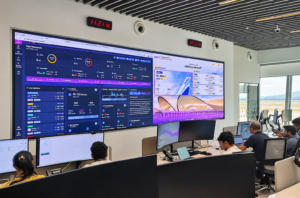
At Guwahati Airport, even the toilets are connected to aviio. During a demonstration, Ghosh opens a dashboard showing individual facilities marked red, with sensor information on occupancy and supplies, including soap, paper and even odours. The system can flag problems to staff responsible for resolving them.
Other dashboards monitor gate utilisation and aircraft turnaround performance. Energy management offers another application, with flight schedules and terminal usage data potentially helping airports adjust heating, ventilation and air-conditioning systems when parts of a terminal are not required.
Adani is also exploring commercial applications for retailers, food and beverage operators and duty-free businesses. More detailed footfall, purchasing and store performance analytics could eventually be offered through paid subscriptions, unlike the operational information provided free to airlines and security partners.
The group is open to collaborating with other airport operators interested in adopting and developing the platform. Although aviio was originally built to establish a consistent approach to measuring performance across Adani’s eight airports, Ghosh sees potential for broader industry use.
“We want to make this a platform that can help with a larger cause: passenger experience and reducing processing times, rather than trying to monetise the platform itself,” she says.
Main image: HitmanH | Dreamstime.com