
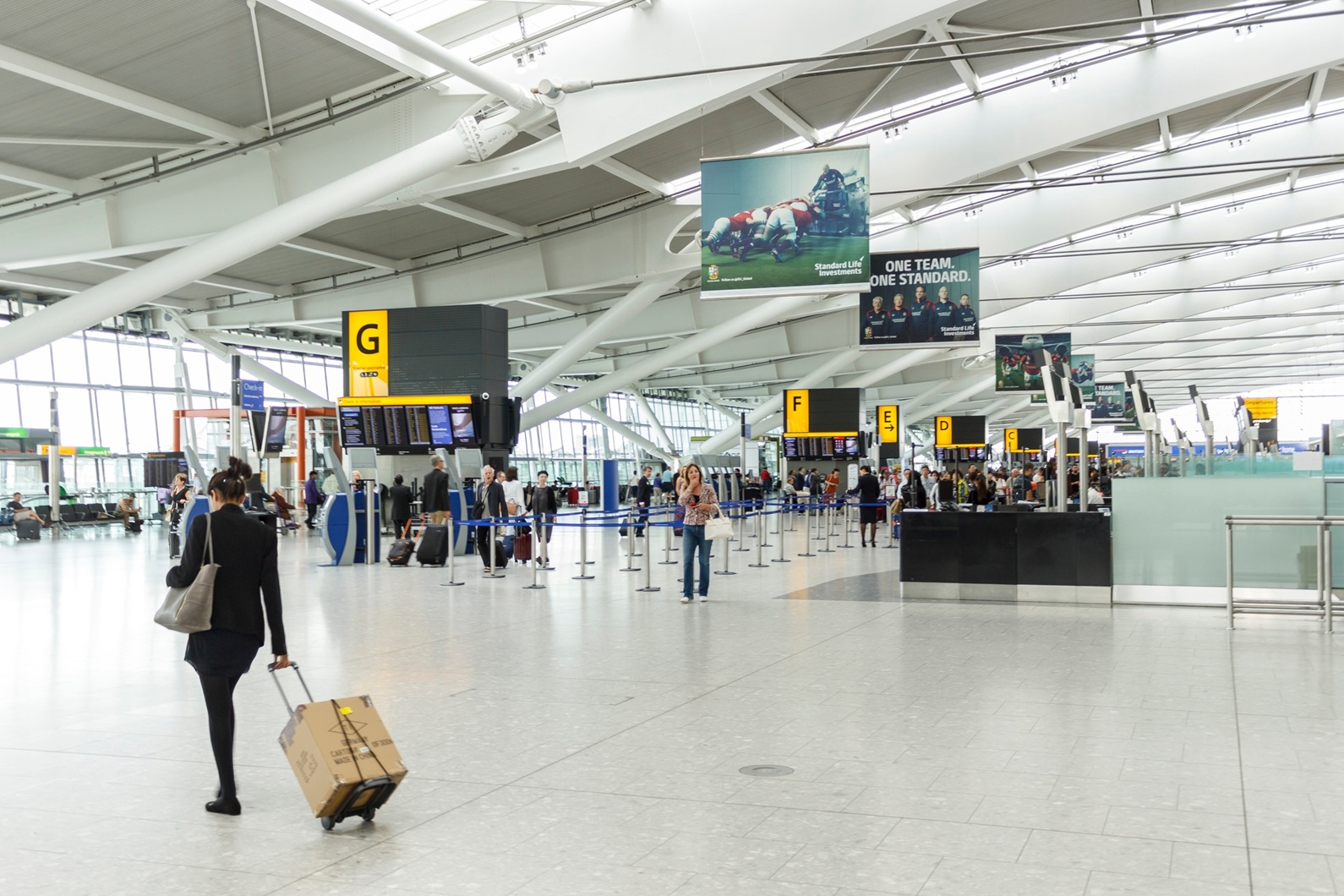
Heathrow’s journey to smarter passenger management
When London Heathrow discontinued its passenger flow monitoring system in 2018, the problems had become difficult to ignore. The technology struggled to track people through crowded terminals and, in some cases, even detected passengers who weren’t there.
“The main reason was the accuracy of the system they had,” says Christian Studer, CEO of Swiss technology company Xovis. “It was not possible to scale that system and get the numbers they asked for.”
The shortcomings also affected Heathrow’s ability to meet passenger waiting time reporting requirements set by the UK’s Civil Aviation Authority (CAA). The airport began testing Xovis’ alternative system in 2018–19, initially on a small scale. That trial has since grown into a much wider programme, with plans for nearly 5,000 sensors across Heathrow’s terminals.
Preparing the ground

Christian Studer, CEO of Xovis
The initial deployment focused on Terminal 2 immigration, where dense queues and complex passenger movements presented challenges for accurate tracking. Heathrow needed consistent, privacy-compliant measurements that could meet regulatory requirements and provide information for operational teams.
Unlike some smaller airports, Heathrow already had the internal expertise to evaluate the technology, including understanding how its algorithms differed from those of competing systems. This allowed the airport to examine the measurements in detail during the initial testing phase.
“They are committed to a data-led approach. They have teams analysing this data and they know what to do with data,” Studer says. “Heathrow was absolutely ready to do this testing.”
That technical readiness helped the airport undertake detailed validation of the measurements, a stage Studer acknowledged can be difficult for airports without comparable internal resources. Heathrow’s data specialists worked directly with Xovis’ analysts and algorithm developers, who were available to explain the system and address questions arising during testing.
“We had a lot of meetings between our analytics team and the data team, and the people who did the validation,” Studer says. “That was one reason why it was successful.”
Privacy was another consideration, with information processed locally on the sensors so that no personal data leaves the devices. The partners also tested whether the measurements would satisfy CAA reporting requirements.
From passenger data to operational decisions
Heathrow’s operational teams now have access to passenger movement and waiting-time measurements through dashboards available on desktops and in control centres. Xovis’ Path Analytics functionality tracks individual passenger journeys without identifying the people involved.
“Their team is using the real-time data to adjust staffing, reallocate resources and coordinate between the teams, with a holistic view from landside check-in to security,” Studer says. “That’s live data they are using day by day, and it’s important that they can act before queues build up.”
Alongside these immediate applications, the airport analyses historical information to identify patterns and assess how effectively terminal space is being used. Immigration areas have been one focus, particularly the arrangement of queues and their effect on passenger throughput.
A further application involves integrating the measurements with another supplier’s smart queuing technology in Terminal 2 immigration. The pilot connects passenger flow information with equipment that can alter the configuration of the queuing area.
“We provide data, and based on that, they control some doors in the queuing space, so that we can dynamically define the queuing setup,” adds Studer.
Heathrow’s size and constant passenger traffic presented practical challenges for installation, particularly when work needed to be carried out without affecting airport operations. Xovis worked with installation teams using standardised planning and commissioning procedures to manage the rollout.
“What helped is that they have a nighttime curfew,” Studer says. “That’s when we did the planning, surveys, installation and testing.”
In 2024, Heathrow migrated to AERO, Xovis’ managed passenger flow solution, which includes reporting and analytics capabilities. The airport began introducing PF-Series sensors in 2026, covering up to eight times the area of the earlier PC2 model and reducing the number of devices required across large spaces.
“It made the installation much simpler and sped up the installation pace,” Studer says.
The programme is progressing through different areas of the airport, with the partners reviewing deployment figures each week. Although already among Xovis’ largest installations, considerable work remains.
“It’s a project which will run for at least the next one or two years,” Studer says. “It’s already one of our biggest installations today, but still far from finished.”
Measuring results and lessons learned
While specific figures on improvements in waiting times, passenger throughput and operational efficiency were not available for publication, Studer outlined how Heathrow is using the data to support operational decisions and longer-term planning. The information forms part of a wider operational data environment rather than functioning as a standalone monitoring system.
“Xovis is part of a much bigger data ecosystem at Heathrow, where flow, fill level, dwell times and waiting times are important,” he says.
The information supports day-to-day capacity management and longer-term demand modelling, as well as check-in desk allocation and investment planning. Although no financial savings have been quantified, the airport can use historical measurements to compare performance following changes to terminal layouts or operating procedures.
“You have evidence, you have a record, and you can measure it,” Studer says.
The deployment has involved numerous teams within Heathrow, extending beyond those responsible for operating the monitoring equipment. Studer says the experience offers lessons for airports considering similar projects, particularly around the preparation needed before implementation begins.
“Early involvement of all stakeholders is important,” he says. “Having all the requirements and success criteria defined at the very beginning and then ensuring that the airport processes are adjusted to the expected outcome.”
Introducing the system has also required cooperation between airport teams and technology specialists as new applications are developed. Studer emphasises that implementation is not simply a matter of installing equipment and handing it over.
“It’s a constant learning process for the customer, and you have to work closely together,” he says.
The relationship now extends into product development, with Heathrow involved in discussions about Xovis’ future technology roadmap, including AI features expected to be released in 2027. The airport is participating in discussions about capabilities beyond those currently available, giving the supplier an opportunity to explore new applications as the deployment continues.
“Heathrow is absolutely willing to support us to test new features and go beyond what the system is capable of today,” Studer says.
Main photo: Paul Maguire | Dreamstime.com