
Dubai Airports engages young talent to develop AI solutions
Dubai Airports is exploring how artificial intelligence (AI) could improve equipment maintenance, disruption management and passenger navigation through an initiative that brings young innovators together with airport technology leaders.
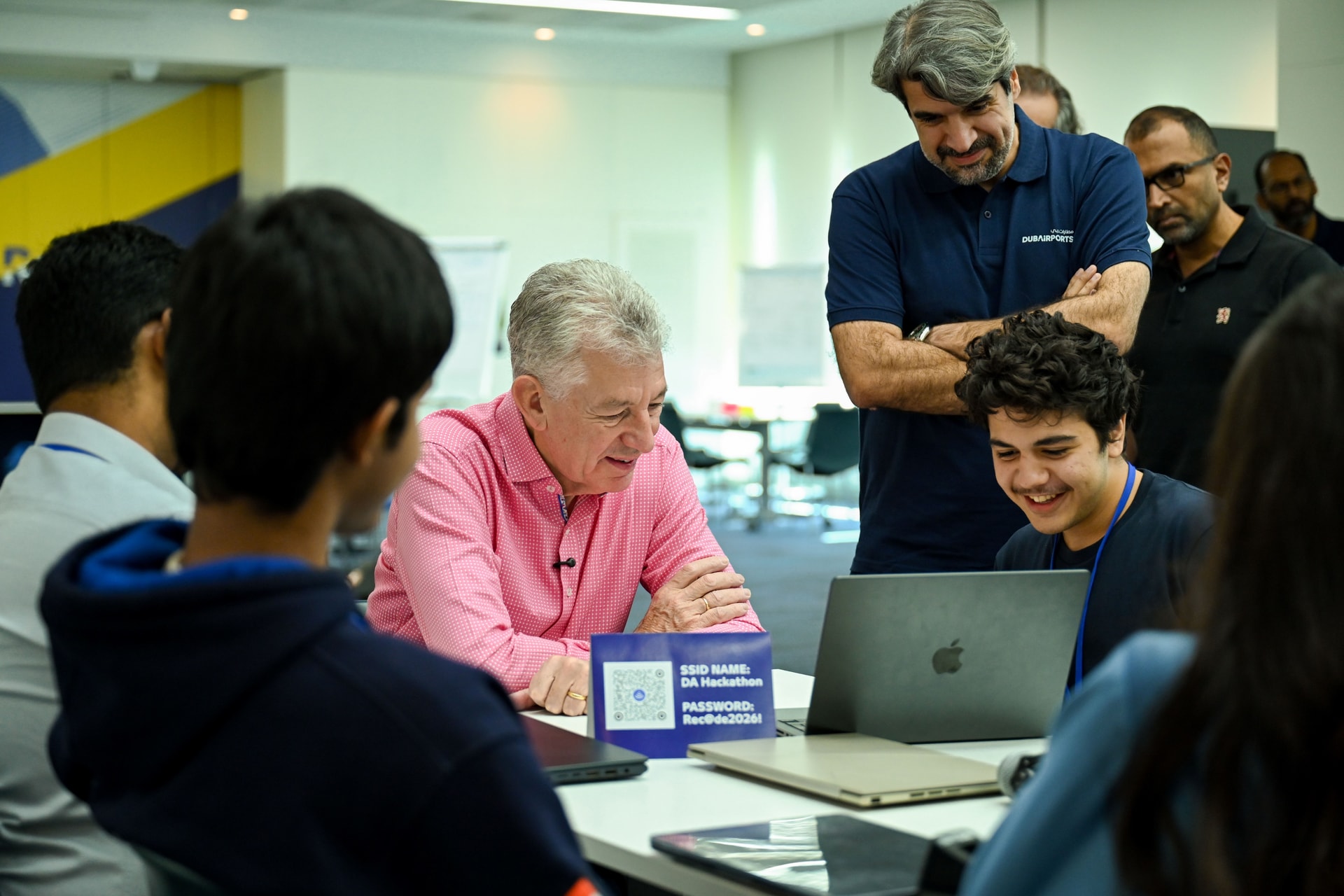
The Dubai Airports Hackathon 2026 brought together 50 school and university students aged 16 to 22 to develop prototypes addressing operational challenges, with AED 120,000 (US$32,700) in prize money awarded to the winning teams.
The competition saw participants work in 10 teams alongside airport mentors, with shortlisted teams presenting their solutions to a panel of senior executives.
“AI makes it easier to get an answer. The harder and more valuable skill is knowing what to ask,” said Omar Binadai, Chief Technology & Infrastructure Officer at Dubai Airports. “What impressed me about these teams was how willing they were to challenge assumptions that come with working in an airport every day.”
Students from the American University of Sharjah secured first place and AED 50,000 for Basira, an AI-powered prototype designed to identify faults in gate equipment and prioritise maintenance requirements according to their potential impact on passengers and gate availability.
The solution can recommend preventive maintenance or the reassignment of flights to alternative gates, while a digital model enables operational teams to pinpoint components requiring attention.
A team from the University of Birmingham received AED 30,000 for Marsad, a platform that consolidates flight, passenger and operational information into a shared dashboard to support coordination between airlines and airport teams during disruptions.
Using a simulated fog scenario, the students demonstrated how the technology could support flight prioritisation and gate allocation while considering passenger connections and the wider operational impact of delays.
Third place was shared by two teams, each receiving AED 20,000. Students from the American University in the Emirates developed DXB One, an AI-powered web application designed to help passengers navigate terminals and locate relevant facilities and services throughout their journey.
The other team, comprising students from several schools, developed an operational dashboard that enables airport teams to monitor aircraft disruptions and track which teams have been contacted and acknowledged requests.
The initiative gave Dubai Airports a fresh perspective on operational challenges while providing students with practical experience in developing and pitching AI prototypes.
“Their ideas showed why we should involve young people early, when we’re still deciding which problems are worth solving and what a better outcome could look like,” added Binadai.
Image: Dubai Airports