
AI assistants handle 13,600 enquiries at San José
San José Mineta International Airport has recorded more than 13,600 passenger conversations with AI-powered virtual assistants since their introduction earlier this year, with the technology resolving approximately 95 percent of questions and achieving an average user rating of 4.6 out of five.
The figures were disclosed by Palo Alto-based AI technology company LiveX, which has launched its AI City platform to provide multilingual assistance, interactive navigation and real-time information across airports and other public venues.
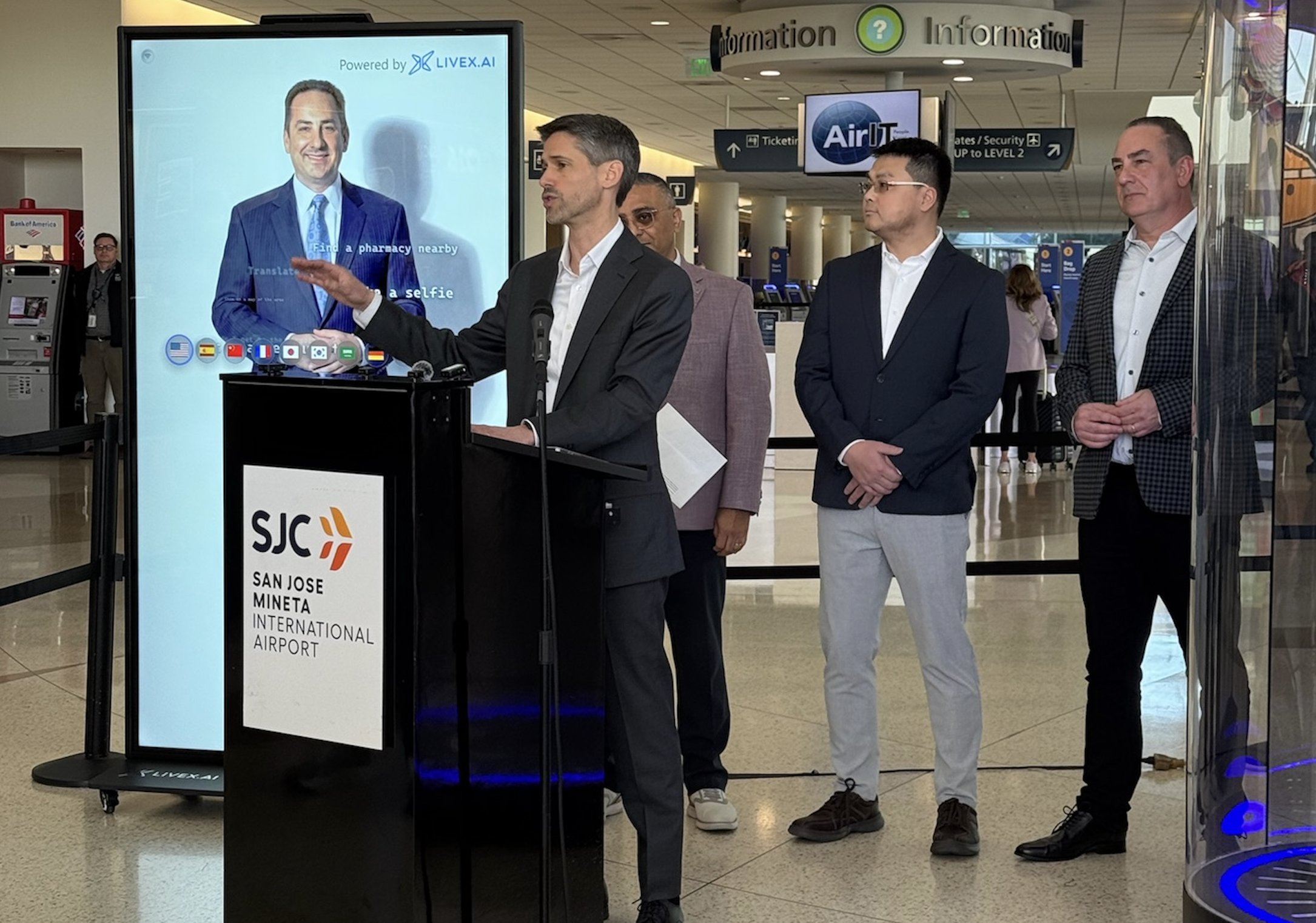
Unveiled at Smart City Expo World Congress in Barcelona, the platform builds on existing deployments at San José, where AI Hosts were initially introduced during Super Bowl LX to help passengers navigate the airport alongside AI-powered holograms of the mayor, Matt Mahan (pictured), and local sports figures.
The assistants have remained in service in Terminal A and at Gate 24 in Terminal B, allowing passengers to request directions verbally, access interactive maps and transfer routes to their phones using QR codes.
Jia Li, Co-founder, President and Chief AI Officer at LiveX, told the Airports AI Alliance that the technology is designed to address the challenges of navigating unfamiliar environments, particularly during periods of heavy passenger traffic.

Jia Li, Co-founder, President and Chief AI Officer at LiveX
“Instead of hunting for an information desk or scanning a static map, visitors can simply walk up and ask, in their own language, with no app or download required,” she said.
According to Li, passenger sessions increased by 74 percent during the 2026 World Cup compared with the preceding period, demonstrating the system’s ability to accommodate higher demand. The deployment has also provided lessons about where assistants should be positioned within terminals.
“Placement matters: Hosts in gate areas, where travellers have time to spare, see far more engagement than those on busy walkways,” Li said.
At San José, the assistant positioned near Gate 24 attracts approximately twice the engagement of one located along a walkway. The technology uses airport-controlled information and NVIDIA retrieval systems to generate relevant responses, while proprietary noise-management technology helps isolate passengers’ voices from background announcements and crowd noise.
“The biggest lesson is that conversation has to work in the real world, not just in a quiet demo room,” Li said.
LiveX has also introduced interactive 3D navigation capabilities, designed to provide more detailed guidance through terminals, and is preparing to deploy Portal, a smaller wall- or stand-mounted device that could extend AI assistance to additional airport locations.
The company says the technology can support routine passenger enquiries while allowing airport staff to focus on more complex requests.