
Tag Archive for: Ground handling

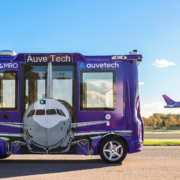
Tallinn Airport launches Europe’s first unsupervised driverless shuttle

Tallinn Airport has become the first airport in Europe to authorise autonomous passenger transport without an onboard safety operator, marking a significant step towards making driverless vehicles part of everyday airport operations.

The development means autonomous shuttles can now operate without a human supervisor on board, with one remote operator overseeing multiple vehicles. The airport is already using the technology to transport maintenance staff and equipment between facilities.

“Tallinn Airport has always placed great importance on innovation and on creating an environment where new technologies can be tested and developed in real-life conditions,” said Riivo Tuvike, Chairman of the Management Board of Tallinn Airport. “The airport environment, with its strict safety requirements, rules and procedures, provides an excellent setting for gaining the experience and knowledge needed to introduce autonomous mobility more widely in the future.”

The service, developed by Estonian company Auve Tech in partnership with aircraft maintenance provider Magnetic MRO, covers approximately 1,000 kilometres per week, with an average autonomy rate of 99.9 percent.

The project began in 2023, when Auve Tech started testing autonomous vehicles at the airport. It progressed to commercial operations in 2025, before receiving authorisation in August 2026 to operate without an onboard safety supervisor.

The eight-passenger electric MiCa shuttle uses cameras and LiDAR sensors to navigate its surroundings. Classified as a Level 4 autonomous vehicle, it can operate independently within defined conditions, while remote supervisors remain available to intervene when necessary.

For Magnetic MRO, the technology has become part of its everyday logistics operations rather than a standalone trial.

“For us, this is not about testing technology anymore. The autonomous vehicles are already part of our daily operations, supporting the continuous movement of people and supplies between our hangars.” said Risto Mäeots, CEO of Magnetic Group.

Kaarel Variksaar, CEO of Auve Tech, said remote supervision was central to making the technology commercially viable.

“A single remote operator can monitor multiple vehicles,and this is a key step toward making autonomous transport economicallycompetitive and scalable.”

Although currently focused on maintenance logistics, the deployment could provide a model for wider autonomous transport services at airports, including moving staff and passengers between facilities.

Image: Auve Tech
AI-monitored aircraft turnarounds outperform industry benchmark

Aircraft turnarounds monitored using artificial intelligence (AI) are running more than a third closer to schedule than the industry benchmark, according to a new report from aviation technology company Assaia.

The company’s 2026 Turnaround Benchmark Report compared approximately 125,000 AI-monitored turnarounds at eight major airports in Europe and North America with 1.5 million turnarounds at 20 comparable airports. During the first quarter of 2026, AI-monitored operations exceeded scheduled turnaround times by an average of 7.3 minutes, compared with 11.4 minutes at the benchmark airports.

Christiaan Hen, CEO of Assaia, told the Airports AI Alliance that the findings demonstrate the potential of real-time monitoring, although other operational factors also influence performance.

Christiaan Hen, CEO of Assaia

“While this comparative analysis cannot establish that AI monitoring alone caused the difference, the findings are consistent with the operational benefits of real-time visibility,” he said. “Assaia’s computer vision technology automatically tracks critical turnaround activities, including baggage handling, refuelling and catering, enabling teams to identify deviations from plan as they happen and intervene before small delays escalate.”

Where delays accumulate

The report also analysed more than 750,000 turnarounds captured by computer vision systems to identify where operations fall behind schedule.

It found that the best and worst-performing turnarounds follow almost identical timelines during their first 12 minutes. Delays subsequently accumulate across activities such as catering, refuelling and baggage handling, often without any single major disruption.

Baggage loading emerged as a particular bottleneck, taking a median of 24.8 minutes during the worst-performing turnarounds, compared with 11.3 minutes during the best.

Hen said the involvement of multiple airlines and ground handlers, often operating different systems, makes identifying problems particularly difficult. AI monitoring can provide a shared picture of activities across aircraft stands, allowing teams to respond before delays affect departures.

“Over time, the data also helps airports and their partners identify recurring bottlenecks,” he said. “This allows them to make more informed decisions about staffing, scheduling and processes, improving efficiency across multiple airlines and handling partners rather than addressing each delay in isolation.”

Results at individual airports

Hen highlighted several airports reporting operational improvements following the introduction of AI-powered turnaround monitoring.

At Berlin Brandenburg Airport, Hen said the introduction of the technology alongside a dedicated operational resilience team has helped reduce ground delays by 69 percent and improve departure readiness by two minutes.

At Rome Fiumicino, passenger boarding bridges are being connected one minute earlier and passenger stairs positioned nearly two minutes earlier. He said airlines at the airport have also recorded a six-minute year-on-year reduction in average departure delays.

At JFK Terminal 4, average ground delays have fallen by five minutes per flight, while the proportion of arriving aircraft finding an available gate has increased by 25 percent, representing an estimated US$40 million in potential annual savings.

And at Toronto Pearson, Air Canada flights actively managed using the technology recorded 3.4 minutes less ground delay on average than other flights during the same period.

Hen said improving turnaround performance could also help airports accommodate growing passenger demand without immediately investing in additional infrastructure.

“Airport capacity is about more than the number of gates available. It’s also about how efficiently those gates are used,” he said.

Main image: Anyaivanova | Dreamstime.com