
AI-powered sign language tools expand accessibility in airports
Airports have made significant progress in improving accessibility, yet gaps remain for deaf passengers – particularly in accessing real-time information. While visual displays and captions are widely used, they do not fully address the needs of sign language users.
According to Signapse, a UK-based startup developing AI-powered sign language translation software, around 70 million deaf people worldwide rely on sign language, yet access to interpretation remains limited due to a global shortage of qualified interpreters.
“For the vast majority of that community, their first language is going to be sign language… and there’s a huge gap in the accessibility of day-to-day information, for example at airports,” explains Leah Clancy, Head of Growth at Signapse.
This gap is particularly visible in dynamic environments such as terminals, where announcements, gate changes and wayfinding information are often delivered via audio systems or text-based screens. For deaf passengers, this can result in missed information and a more fragmented journey.
From compliance to passenger experience

Leah Clancy, Head of Growth at Signapse
Increasingly, airports are reframing accessibility as part of the overall passenger experience rather than a compliance requirement. This shift is driving interest in solutions that deliver information in formats aligned with passengers’ linguistic needs.
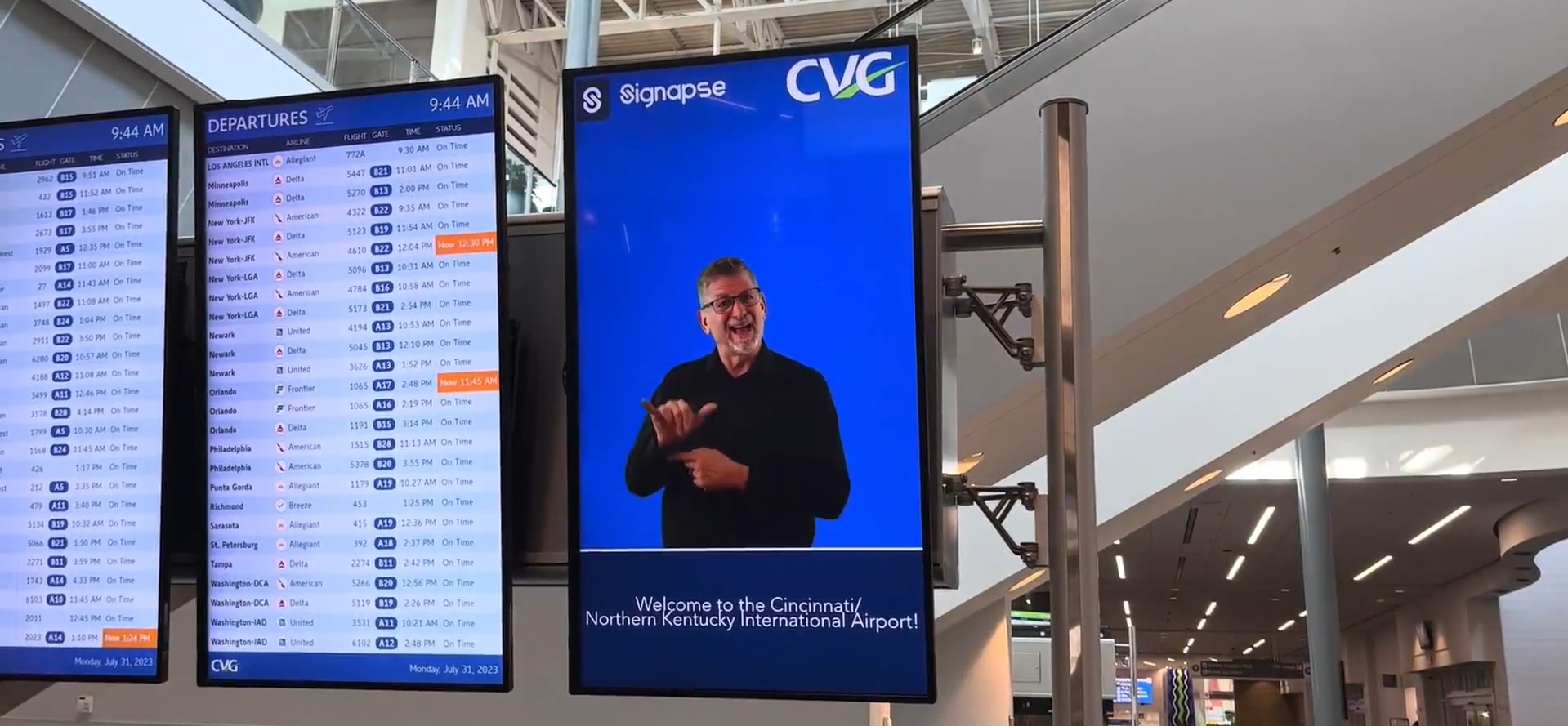
Cincinnati/Northern Kentucky International Airport (CVG) has explored this approach, integrating American Sign Language (ASL) into existing passenger information systems. The objective was to move beyond minimum requirements and embed accessibility into day-to-day operations.
“They had a very clear vision of not just complying with accessibility requirements, but really becoming a standard in what accessibility innovation could look like,” says Clancy.
Rather than relying on standalone systems, the solution was integrated into existing digital displays, allowing sign language content to be delivered alongside standard passenger information. This approach highlights how accessibility measures can be layered onto current infrastructure without major disruption.
Enhancing independence and inclusion
Providing information in sign language can significantly improve independence for deaf passengers, particularly in time-sensitive environments such as airports.
Clancy notes that access to information in a passenger’s primary language reduces reliance on staff or companions: “It means that they don’t have to ask for help – it really creates that independent travel experience that they should be having.”
Initial deployments, including at CVG, indicate that such solutions can extend to wider applications across the passenger journey, including real-time announcements, emergency messaging and personalised information delivered through mobile channels.
For airports, the opportunity lies in extending accessibility beyond compliance and embedding it into core operations. As Clancy concludes: “Accessibility is often treated like a compliance checkbox, but it should be much more than that. It’s a core part of the passenger experience.”