
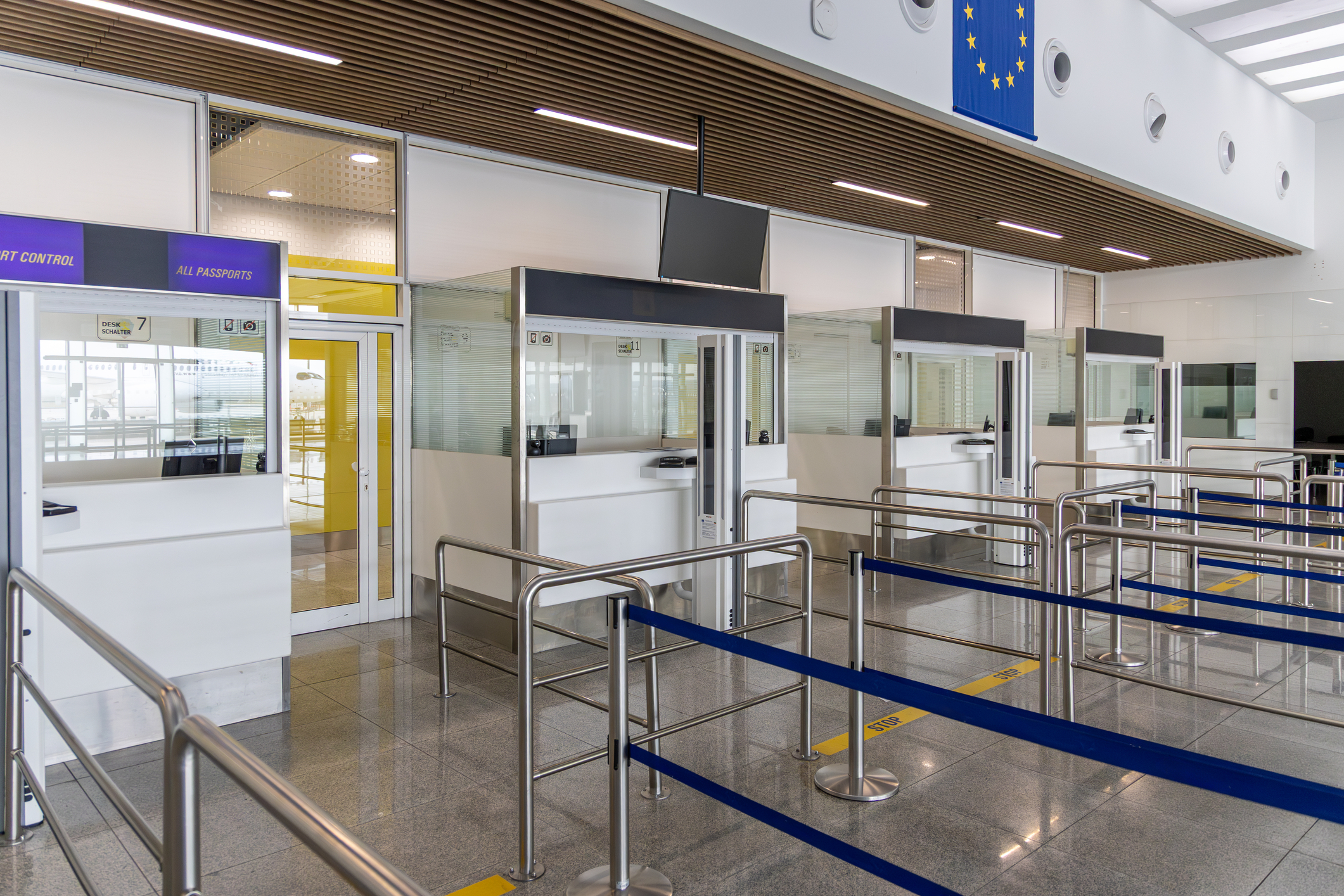
New biometric system removes airport border stops
SITA has launched a border processing system designed to verify pre-cleared passengers as they walk through immigration halls, removing the need for eligible travellers to stop at a passport desk, kiosk or eGate.
SITA Border Flow Lane uses information collected before departure to create a digital travel credential for enrolled travellers. Cameras installed along an arrivals corridor then match each passenger against that credential as they move through the airport.
“Travellers first enrol and confirm that they match the digital travel credential created during enrolment and pre-clearance ahead of travel,” Igor Oliveira, Head of Portfolio, Solutions & Innovation at SITA Borders, told Airports AI Alliance. “At the border, cameras positioned along the arrivals corridor match each traveller against the digital travel credential that was created in advance when they enrolled and were pre-cleared.”
Border authorities retain control over identity verification and clearance decisions, while officers can intervene at any point.
“This happens with no gate, document scan or device to interact with,” Oliveira said. “Behind the scenes, data analytics and automated decision support apply the border agency’s rules and flag anyone who requires further checks.”
SITA estimates that more than 75 percent of travellers could be cleared before departure and that the system could process passengers up to eight times faster than conventional eGates. However, these figures are modelled estimates based on testing and analysis rather than results from a live airport deployment.
A conventional border gate typically processes one traveller every 15–20 seconds. Border Flow Lane is designed to verify several eligible travellers continuously while they are moving, although its performance will depend on passenger volumes, the proportion cleared in advance and local operating conditions.
“The figure is realistic and modelled operational outcomes that reflect the performance potential of SITA Border Flow Lane’s operating model, as identified in our testing and analysis, not results from a live deployment,” Oliveira said.
“Border Flow Lane isn’t promising that every airport will instantly operate at eight times throughput. The point is that the operating model removes many of the constraints created by traditional stop-and-process interactions.”
The system has been introduced as a co-innovation initiative and is installed in SITA’s innovation laboratories and testing facilities. The company is engaging with governments and border agencies interested in piloting and refining it in operational environments but has not announced the location or timing of its first live passenger deployment.
For airports, reducing the number of passengers required to stop could increase the capacity of existing immigration halls without physical expansion. It could also enable border officers to focus more attention on passengers requiring closer examination.
Enrolment will be voluntary. Travellers will be checked only against the credential created during their enrolment and pre-clearance, rather than a wider population database. Border agencies will determine eligibility, data requirements and how information is handled under applicable laws and policies.
“Travellers who choose not to enrol or cannot use biometric processing continue through the border agency’s existing assisted or officer-led process,” Oliveira said. “Each deployment will include accessibility and human-support options appropriate to the airport and its travellers.”
Image: Dechev | Dreamstime.com