
Eduardo Valencia named new AAA president
Eduardo Valencia, Chief Information Officer at the Metropolitan Airports Commission, has been appointed President of the Airports AI Alliance (AAA). He will help shape its strategy, strengthen engagement across the international airport community and lead discussions at key meetings.
Valencia has been involved with the alliance for two years in a leadership and advisory capacity as a member of the Alliance’s Executive Committee.
He will take over from Paul Puopolo, Chief Technology and Innovation Officer at Dallas Fort Worth International Airport. Puopolo has played a key role as founder president in driving forward the Alliance from 7 founder airports to its current membership of 54 airports across North America, Europe and Asia-Pacific. Puopolo will continue as a member of the Executive Committee.
Valencia said the presidency offered an opportunity to take a more influential role in advancing the airport industry’s use of AI.

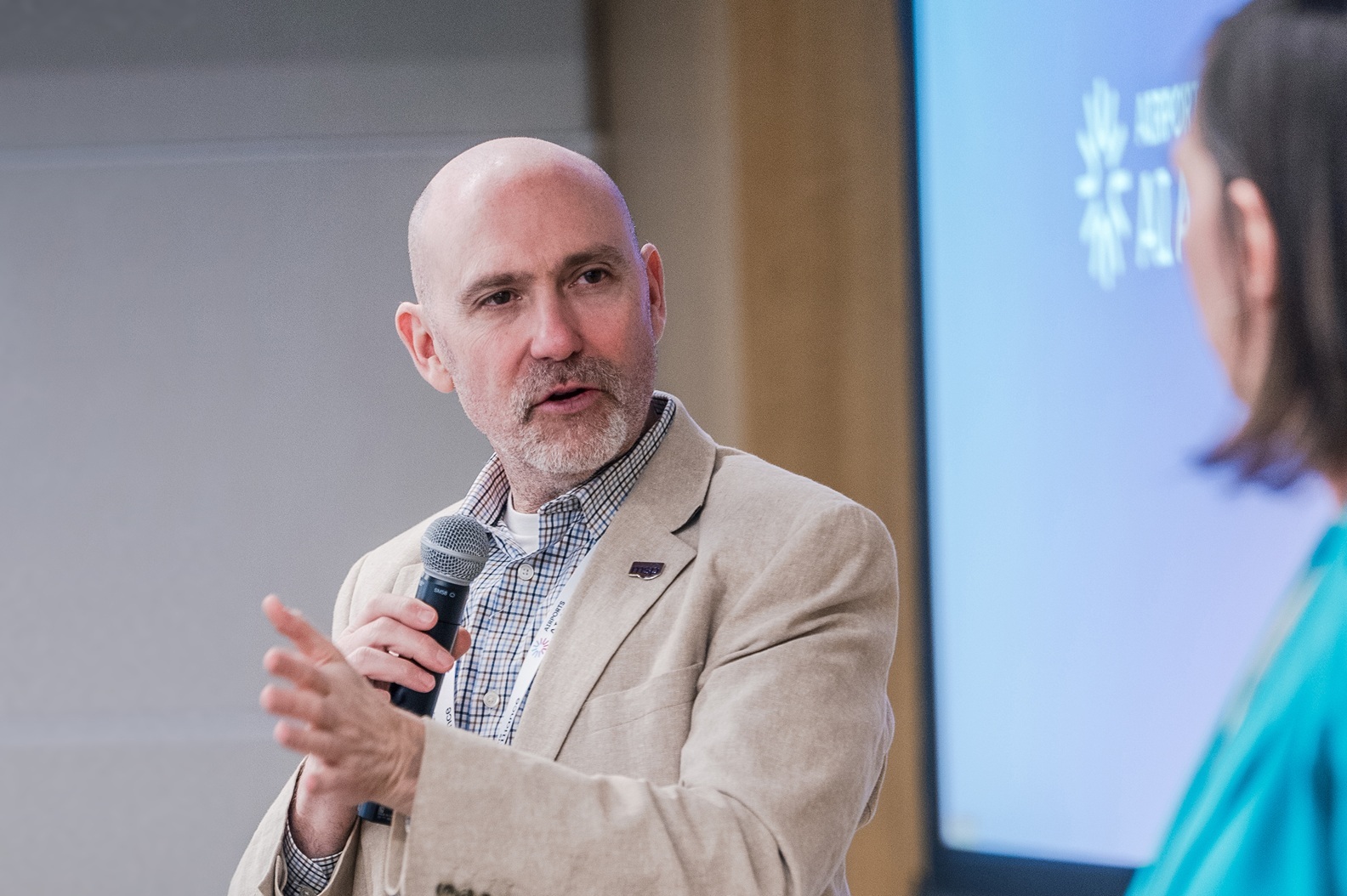
Eduardo Valencia, Chief Information Officer, Metropolitan Airports Commission
“It’s a great opportunity to lead such a group,” Valencia said. “It’s a great platform to really advance the use of AI and the way that we, being the airport community and aviation in general, leverage a very key technology capability in AI to really advance and drive business value.”
The Alliance brings together technology, industry and business expertise to explore the potential of AI in aviation. Valencia said his existing involvement had shown him what the organisation could achieve.
“[The AAA] is an incredible balance between technologists, industry and business in the context of AI and what it can do for our organisations,” he said.
Valencia has identified three main areas for his presidency. The first will be assisting with strategy and helping the Alliance identify the outputs and applications most relevant to airports.
“I can assist with the thinking on what are the most important topics and most relevant pragmatic components of advancing the use of this technology within our industry,” he said.
His second priority will be acting as an ambassador, reaching out to airport professionals and encouraging members of the international community to become involved. With numerous industry forums competing for their attention, Valencia believes personal relationships will be essential to sustaining engagement.
“There’s an element of making sure that our colleagues are engaged, that those participating from the international airport community are engaged, and that there’s a certain amount of reaching out and keeping the organisation healthy and coherent,” he said. “Yes, it is AI, but it is also done through human relationships.”
Valencia will also take an active role in the Alliance’s major meetings, leading conversations and providing input on key focus areas alongside the Executive Committee to drive measurable business outcomes for members.
Starting with the problem
Despite widespread interest in AI, Valencia says investment remains relatively low.
“I don’t think they’re spending too much,” he said. “It’s less than 5 percent of budgets these days, so I don’t think that there’s a lot of waste.”
The greater risk is that airports buy tools or pursue AI projects without first identifying a clear operational or commercial need.
Organisations can become focused on using a particular technology when another approach might deliver the desired result more effectively.
“What they may be spending is sometimes in tooling and in trying to get to solutions that don’t necessarily have a problem, or alternative ways by which something can be done just because it can be done, without really understanding what kind of value and outcomes we are trying to drive,” Valencia said. “I strongly believe that technology is a means; it’s not an end.”
People and data
Valencia identified workforce literacy and data as the foundation airports should strengthen in preparation for greater AI adoption. For employees, he favours an ongoing process of learning and exploration over one-off training.
“I don’t want to call it training,” he said. “I want to call it continuous learning and exploration of the technology itself. Your people are going to be the most critical component of it and making sure that you’re driving literacy is critical.”
As comparable AI products become available from a range of providers, airports’ ability to differentiate themselves will increasingly depend on their employees and the information available to their systems.
“If you can buy AI from multiple providers, the differentiator is going to be your people and your data,” Valencia said. “Investing in those two foundational elements is absolutely critical.”
Valencia said AI provided an opportunity for technology leaders to reconsider established processes and how their organisations create value. His presidency will focus on helping airports translate that potential into practical results.
“We need to make sure that we’re driving really pragmatic use and that we try to separate hype from reality,” he said. “We need to meet people where they’re at in their own journey and advance this technology capability in order to assist them to drive value.”