
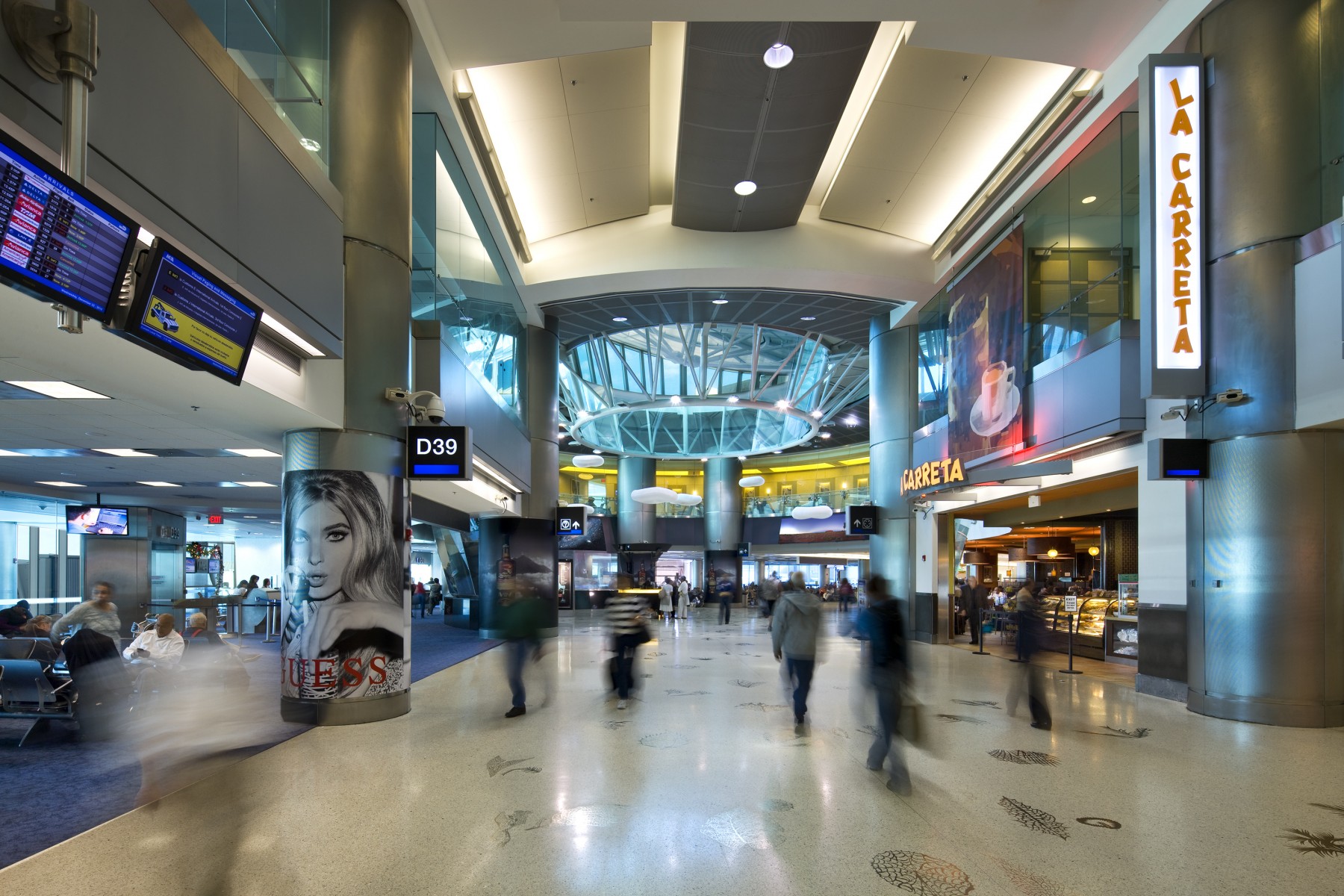
How Miami is using AI to unlock commercial intelligence
Airport retail performance is shaped by constant variability – shifting passenger flows, changing demographics and constrained dwell time. The question for many operators is how to respond in real time.
 Based on insights from Miami International Airport (MIA), a new Airports AI Alliance case study explores how the airport is using AI and integrated passenger data to move from static retail planning to a more adaptive, passenger-informed commercial model.
The case study builds on a presentation by Maurice Jenkins, Chief Innovation Officer at MIA, delivered during a recent Commercial & Passenger Innovation Working Group session.
Rather than treating AI as a marketing overlay, MIA has focused on linking operational data, passenger flow insights and anonymised point-of-sale transactions within a unified analytical framework. By combining flight information, dwell-time analytics and retail performance data, the airport is able to identify how operational conditions influence spending behaviour and conversion patterns.
The paper also highlights how governance and interoperability are critical enablers. Instead of mandating uniform POS systems, MIA has prioritised data integration at the edge, allowing insight generation while preserving concessionaire autonomy.
A further theme is the alignment of operational and commercial planning – including how gate allocation, queue management and dwell time can directly influence retail performance.
The case study How to increase commercial revenue using AI and passenger data, is now available exclusively to members in the Airports AI Alliance members’ area.
Photo: Miami International Airport