December 2, 2025
by
Airports AI Alliance
A new collaboration between Illuminex AI, Ontario Vehicle Innovation Network (OVIN), and the Greater Toronto Airports Authority (GTAA) aims to deploy advanced AI-powered infrastructure inspection tools at airports in Ontario, marking a shift toward data-driven maintenance and surface safety monitoring at airfields. The initiative is part of a broader effort — funded through OVIN — to develop and scale AI solutions across both airfields and roads.
Under the agreement, Illuminex AI will use its InspectEx™ platform, which fuses data from cameras, LiDAR, GPS and inertial sensors, to create two new AI models: one dedicated to analysing surface condition of pavements, runways and taxiways (Surface AI™), and another to verify pavement markings and detect wear or degradation (Marking AI™).
The technology is designed for flexible deployment — from ground vehicles and drones to fixed-site installations — enabling real-time detection of foreign object debris, surface cracks, worn markings and other anomalies that can compromise airfield safety. Alerts and diagnostics are logged to a central cloud system, supporting maintenance teams to plan interventions more proactively.
The US$2.1 million project, jointly supported by the Government of Ontario and the Greater Toronto Airports Authority, includes around US$700,000 in public funding from the Ontario Vehicle Innovation Network.
Todd Browne, Associate Director of Airside Operations at the Greater Toronto Airports Authority, described the partnership as a step toward “next-generation AI solutions that have the potential to not only empower our airfield operations team, but the broader smart mobility ecosystem in Ontario.”
Brian Freed, CEO of Illuminex AI, said the collaboration represents “a significant milestone for Ontario’s talent development in AI-driven smart mobility solutions.” He added that the new platform could reshape how infrastructure maintenance and safety are managed across both airfields and public roads.
For airports such as those operated by GTAA, AI-driven inspection tools could shift maintenance regimes from reactive repairs to predictive, data-informed upkeep. The ability to detect debris, surface wear or marking degradation early — and to geo-locate issues precisely — offers potential gains in safety, operational uptime and cost management.
More broadly, the project reflects growing interest in integrating airfield management within wider mobility frameworks, where airport infrastructure is managed alongside road networks and autonomous vehicle systems. This could pave the way for future cross-modal maintenance strategies and more coordinated infrastructure monitoring.
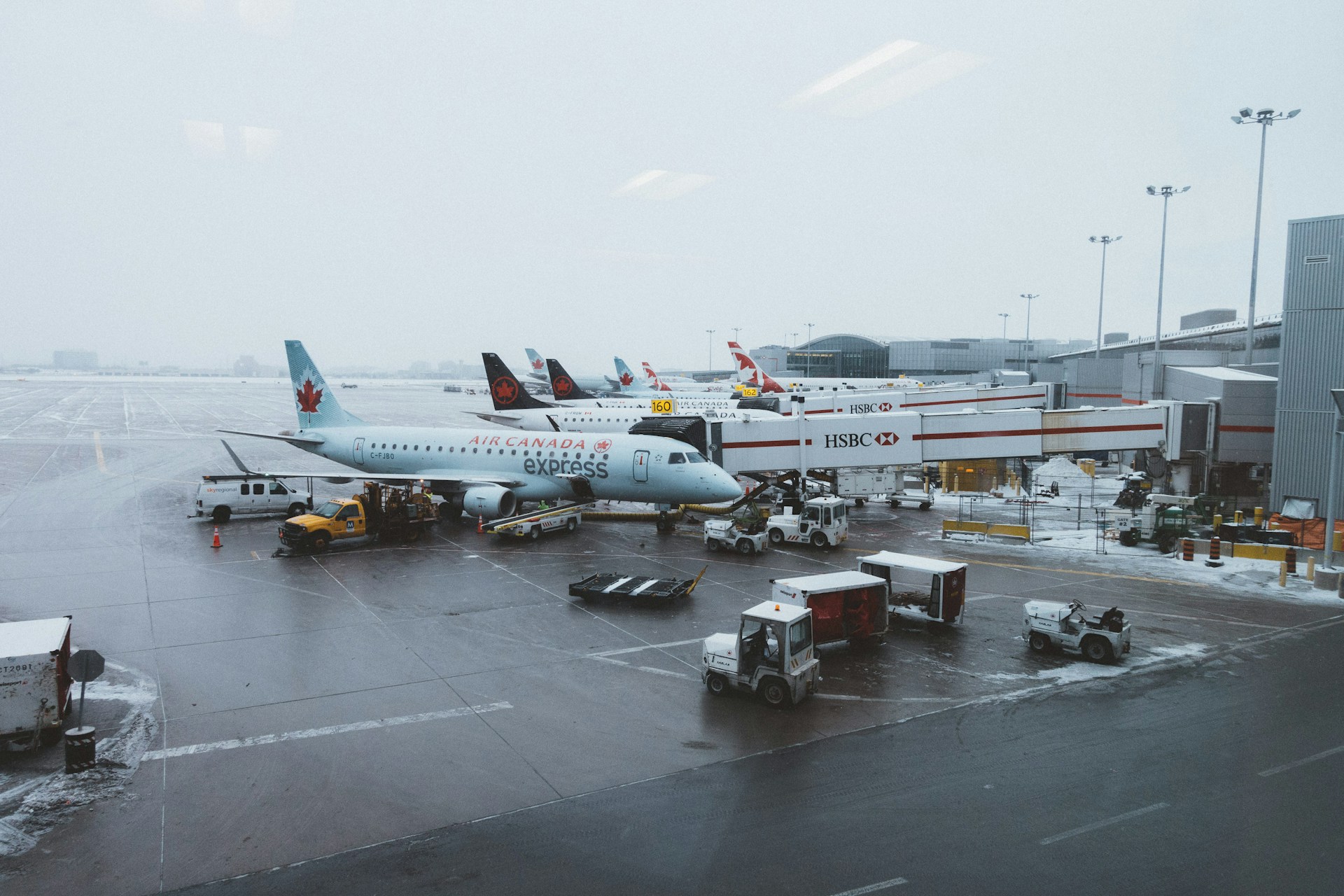
Photo by David Preston on Unsplash